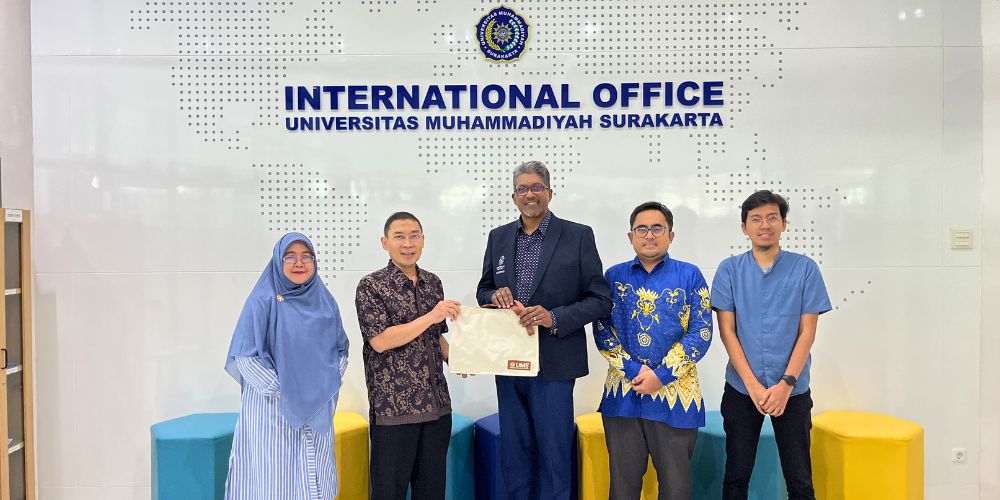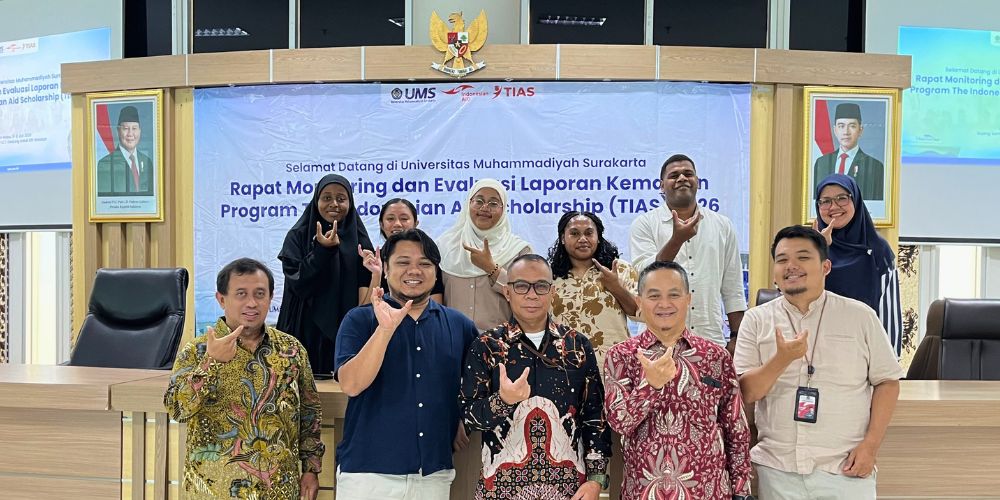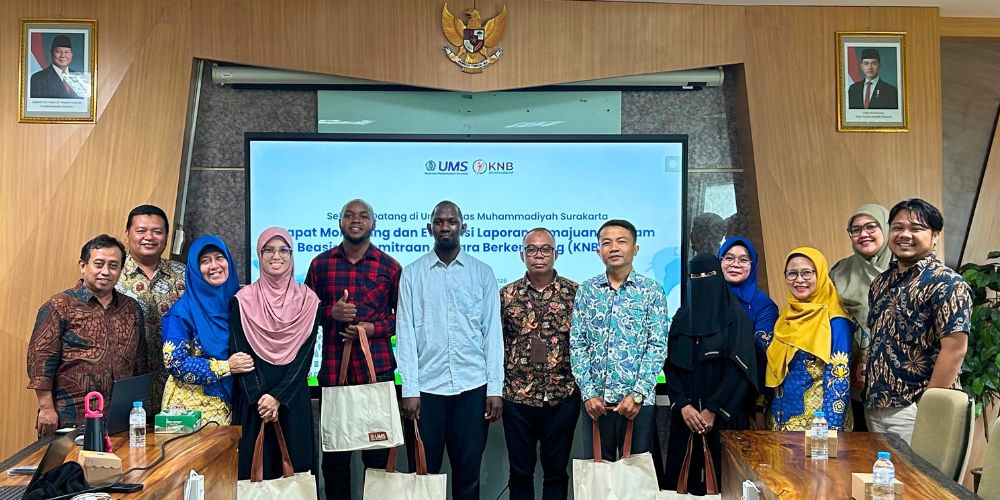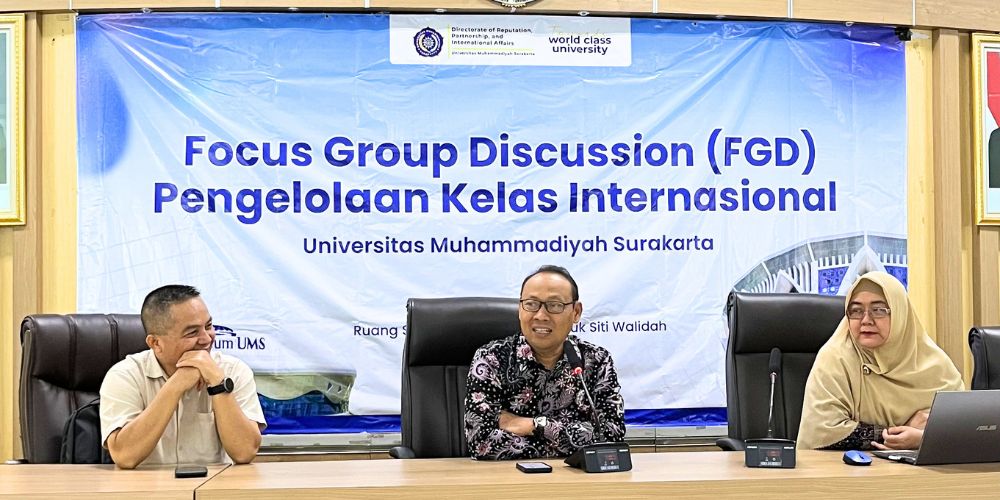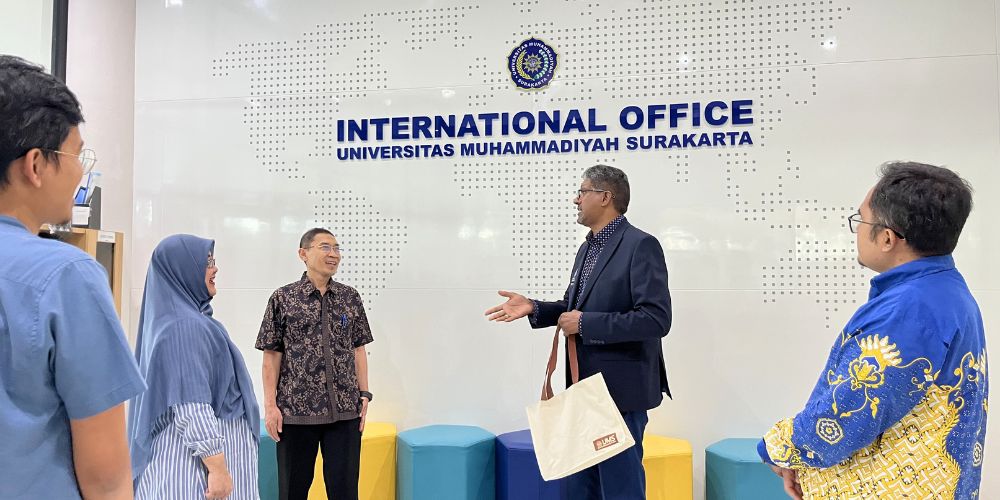

Surakarta, July 6, 2026 – Universitas Muhammadiyah Surakarta (UMS), through the Directorate of Reputation, Partnership, and International Affairs (DRKUI), welcomed a delegation from the University of Zululand, South Africa, for a strategic discussion on expanding academic collaboration and international mobility opportunities. Held on Monday, July 6, 2026, at the DRKUI UMS Meeting Room, the meeting brought together representatives from both institutions to explore sustainable and mutually beneficial partnerships that support the internationalization of higher education.
During the meeting, Prof. Kevin, representing the University of Zululand, emphasized his institution’s commitment to developing a broad and sustainable partnership with UMS. Rather than focusing on a single collaborative activity, the proposed partnership is intended to foster reciprocal cooperation that enables both universities to learn from each other’s strengths and experiences.
The collaboration is expected to encompass a wide range of academic initiatives, including student exchange, faculty and staff exchange, visiting scholar programs, joint conferences, collaborative research, and academic capacity development.
“We envision a partnership that is reciprocal and mutually beneficial. Both institutions should have the opportunity to exchange knowledge, share best practices, and grow together. I also look forward to visiting UMS again to participate in one of its upcoming international conferences,” said Prof. Kevin.
In addition to academic collaboration, the discussion highlighted the University of Zululand’s strong commitment to women’s empowerment in higher education. Prof. Kevin explained that female academics are actively encouraged to pursue leadership roles, research excellence, and professional development while balancing their personal and professional responsibilities.
Currently, several faculties at the University of Zululand are led by female deans, reflecting the institution’s commitment to equal opportunities based on competence and merit rather than gender.
“Leadership should always be determined by capability, not by gender. The outdated perception that women are less capable than men has no place in today’s academic environment,” he emphasized.
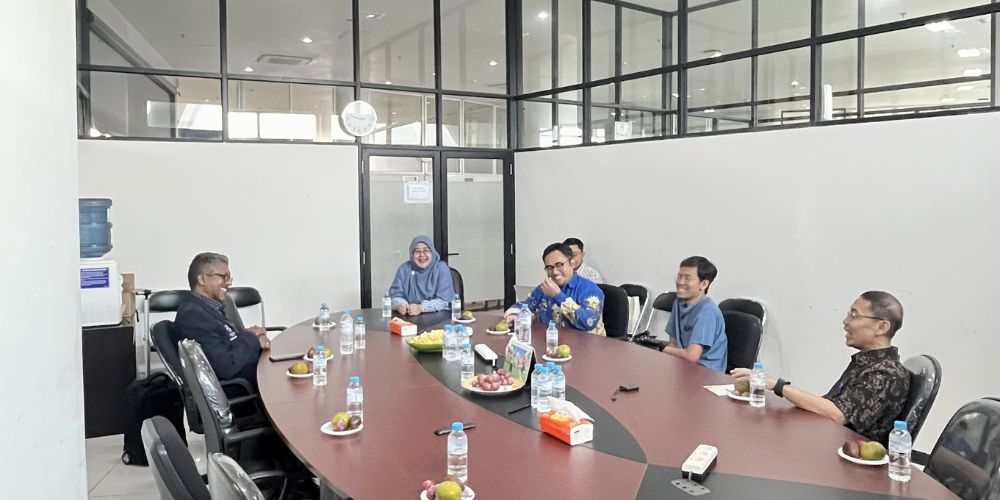
The meeting also focused on the implementation of a student exchange program between UMS and the University of Zululand. Hepy Adityarini, Ph.D., Head of the Subdirectorate of Academic Partnership Development and Mobility at DRKUI UMS, noted that UMS sees significant potential for launching the program, although graduate student mobility presents unique challenges because many master’s students are already employed full-time.
She explained that February would be the most suitable period for student exchange based on UMS’s academic calendar, as students have completed their semester examinations. Hepy also inquired about accommodation arrangements for incoming exchange students at the University of Zululand.
Responding to these questions, Prof. Kevin affirmed that a student exchange program between the two universities is highly feasible. However, he stressed that successful implementation requires careful planning, particularly regarding student safety, risk management, academic continuity, and overall student welfare.
He emphasized that international mobility programs should extend beyond classroom learning by incorporating cultural immersion, community engagement, academic seminars, workshops, and other activities that enrich students’ global perspectives.
“Student exchange should never become a sponsored holiday. It should be a meaningful academic journey that combines learning, cultural exchange, and community engagement,” Prof. Kevin remarked.
He further explained that third-year undergraduate students would be the most suitable participants, as they generally possess stronger academic readiness and adaptability. Nevertheless, funding remains one of the greatest challenges in implementing international mobility programs. Other important considerations include accommodation, transportation, healthcare services, orientation, student support, and program documentation.
During the discussion, Prof. Supriyono, S.T., M.T., Ph.D., Vice Rector V of UMS, raised questions regarding media reports about demonstrations and the overall security situation in South Africa. Prof. Kevin responded by explaining that media coverage does not always reflect the country’s everyday reality.
According to him, while certain demonstrations have been influenced by political dynamics and isolated incidents of unrest, they should not be viewed as representative of South Africa as a whole. He added that cities such as Cape Town and several other destinations remain safe and welcoming for international students, although, like any major city, they require reasonable awareness of urban safety.
The discussion also explored diversity and inclusivity at the University of Zululand. Responding to a question from Hepy Adityarini regarding religious diversity and the presence of Muslim students and staff, Prof. Kevin explained that the university embraces a multicultural academic environment. Its community includes individuals from Malay, Indian, Chinese, and various African backgrounds, representing different religions, cultures, and traditions.
He noted that the university fosters an inclusive campus culture built on mutual respect, equality, and harmonious coexistence among diverse communities.
The meeting concluded with a shared commitment from both institutions to pursue sustainable and impactful collaboration across academic and non-academic fields. UMS and the University of Zululand agreed that future international mobility initiatives should deliver meaningful academic experiences, intercultural understanding, and community engagement, ensuring that students and faculty members gain lasting value from every collaborative program. Through this partnership, both universities reaffirm their commitment to strengthening global academic networks and creating collaborative opportunities that contribute to educational excellence and international engagement.