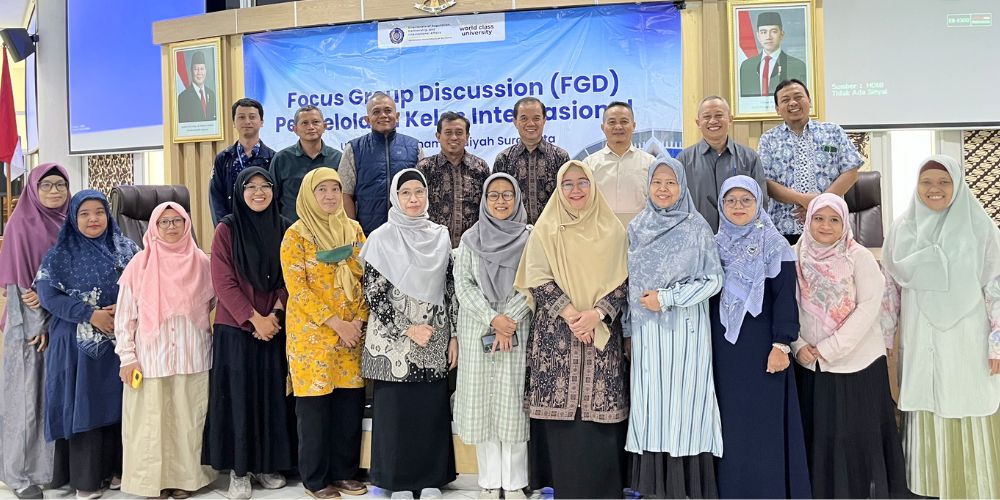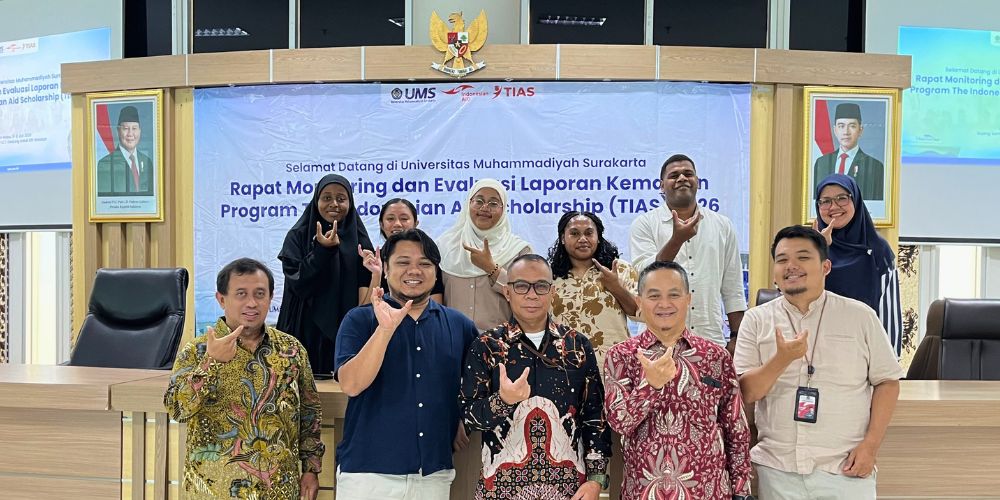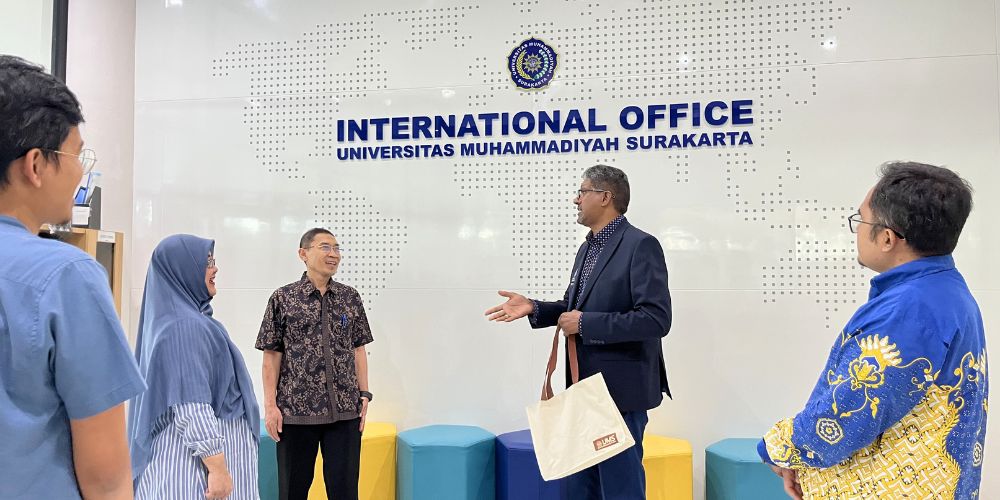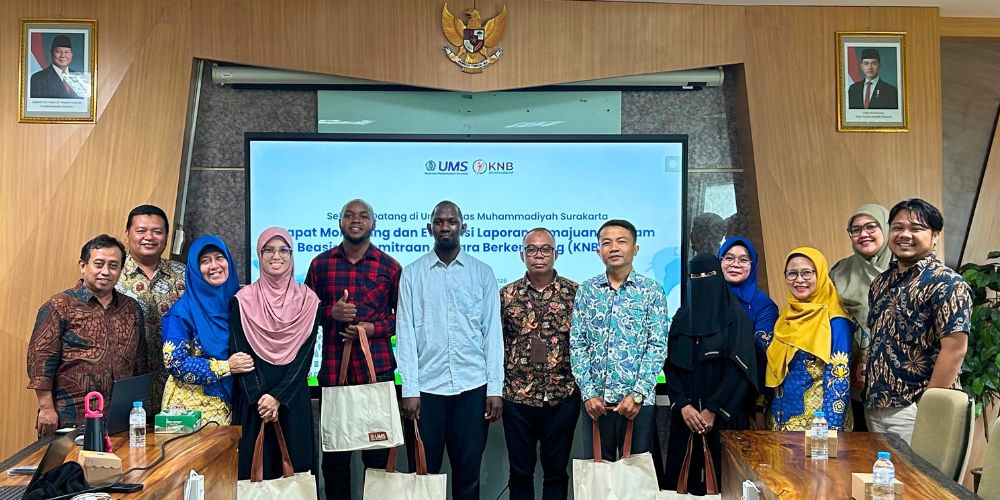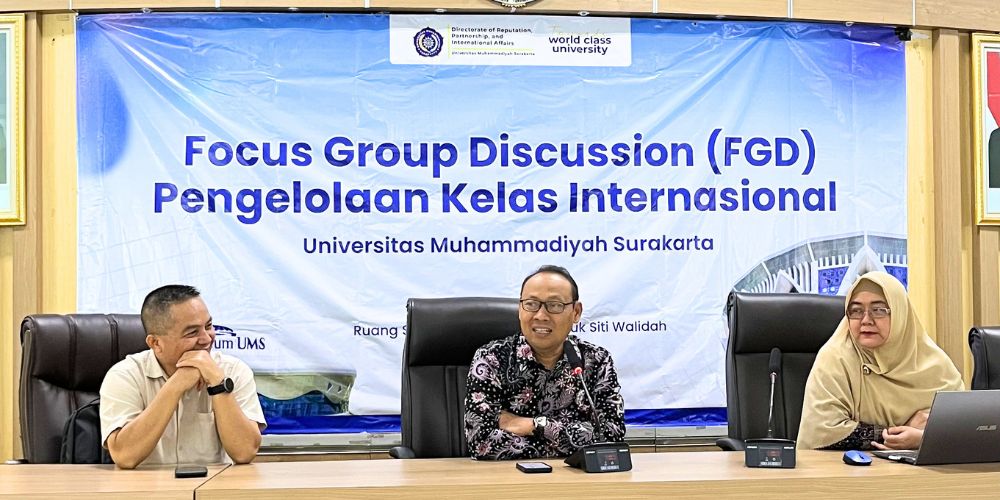

Surakarta, June 25, 2026 – The Directorate of Reputation, Partnership, and International Affairs (DRKUI) of Universitas Muhammadiyah Surakarta (UMS) organized a Focus Group Discussion (FGD) on International Class Management as part of its efforts to evaluate and formulate strategies for strengthening the implementation of international classes across the university. The event brought together key stakeholders, including representatives from faculties, study programs, and supporting units involved in advancing UMS’s internationalization agenda.
The FGD was divided into three main discussion groups: Admission & Student Recruitment, Teaching and Learning Process, and Monitoring and Evaluation. Through these sessions, participants identified existing challenges and developed strategic recommendations to enhance the quality, management, and global competitiveness of UMS’s international classes.
The Admission & Student Recruitment session focused on strategies to increase student enrollment in international classes. One of the key issues discussed was the relatively low number of applicants and the need to establish clearer distinctions between international and regular class programs. To address these challenges, participants proposed optimizing digital promotional strategies through collaboration between the Public Relations Office and study programs, developing a dedicated international class prospectus showcasing global opportunities such as student exchange and internship programs, and creating more flexible admission pathways that would allow regular students to transfer into international classes during specific semesters.
Meanwhile, the Teaching and Learning Process group emphasized the importance of improving academic quality, particularly by strengthening the use of English as the primary language of instruction. The forum recommended structured English language training for lecturers, enhancing students’ language proficiency through the English Intensive Course (EIC) program, and organizing interdisciplinary public lectures conducted in English. In addition, DRKUI proposed providing mobility subsidies for students and lecturers through the MyMobility portal to expand access to international learning experiences. For students participating in the Double Degree Program in South Korea, the forum also recommended offering Korean language preparatory classes to help them meet language proficiency requirements before departure.
The Monitoring and Evaluation discussion focused on strengthening the governance of international classes through standardized procedures and digital transformation. Participants proposed developing an international class roadmap for each study program, implementing a readiness-based leveling system for international class providers, and establishing an International Class Dashboard to monitor international student data, academic performance, study duration, and immigration status in an integrated system. Furthermore, the implementation of an Early Warning System (EWS) and a One Stop International Service platform was recommended to streamline academic, administrative, immigration, and student support services.
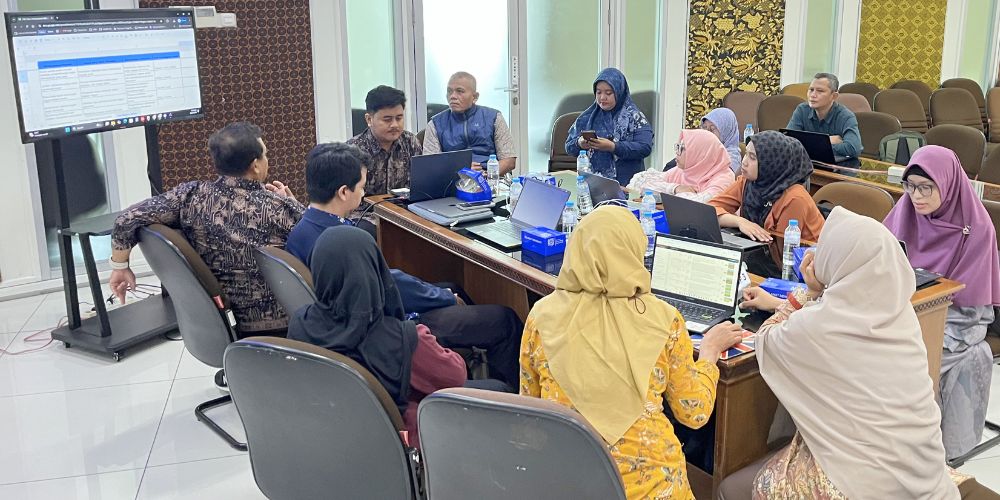
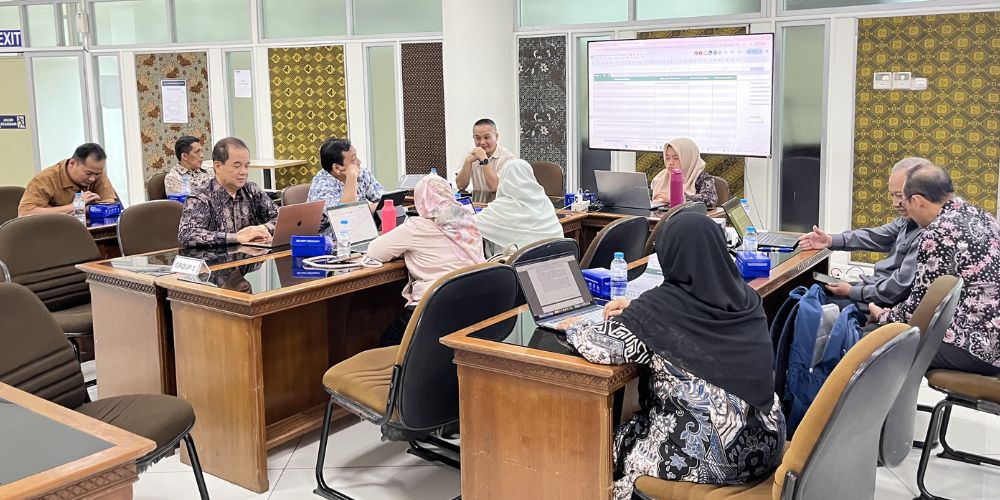
The FGD also served as a platform for sharing best practices among study programs. The Islamic Education Study Program, for example, presented its successful student mobility program conducted in collaboration with Universiti Sains Islam Malaysia (USIM) over the past four years, along with plans to expand the initiative to Thailand. Meanwhile, the Nursing Study Program highlighted financial constraints as a major challenge in making international exposure a compulsory component of the curriculum, despite having established partnerships with several overseas universities.
Hepy Adityarini, Head of the Subdirectorate of Academic Partnership and Mobility at DRKUI UMS, stated that the FGD represented a strategic initiative to align perspectives and formulate a more integrated direction for the development of international classes across all study programs.
“Through this FGD, we aim to gather comprehensive input from each study program regarding the challenges and needs in managing international classes. The outcomes of these discussions will serve as the foundation for developing policies, strengthening support services, and enhancing the quality of international class management so that our programs become more competitive and contribute to UMS’s internationalization goals,” said Hepy.
She further emphasized that the development of international classes should focus not only on increasing the number of international students but also on enhancing the overall quality of students’ learning experiences. Strengthening language proficiency, expanding international mobility opportunities, and leveraging digital technology in governance will remain key priorities to be developed collaboratively by DRKUI, faculties, and study programs.
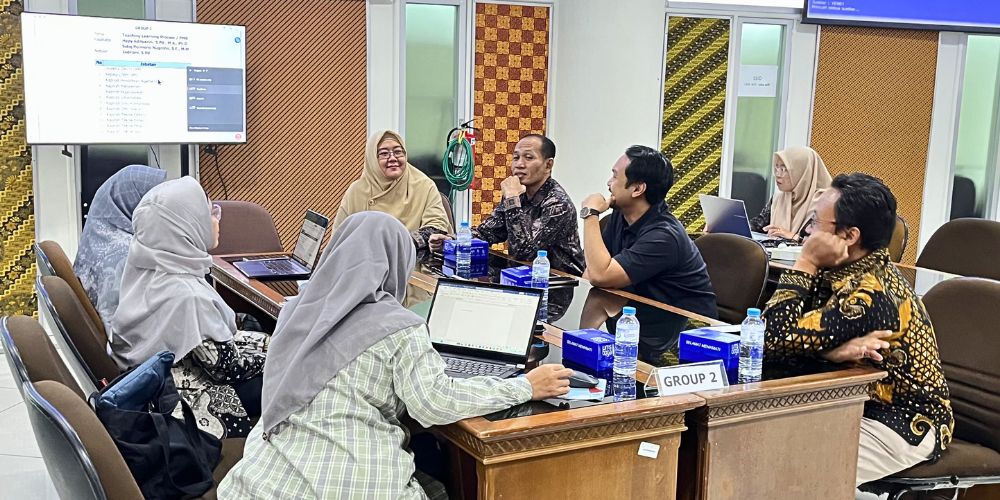
Through this comprehensive discussion, UMS reaffirmed its commitment to continuously improving the quality of its international class programs as an integral part of the university’s internationalization strategy. Strengthening language competencies, expanding access to international mobility programs, and advancing digital governance have been identified as the three primary priorities in developing internationally competitive programs that provide students with world-class academic experiences.