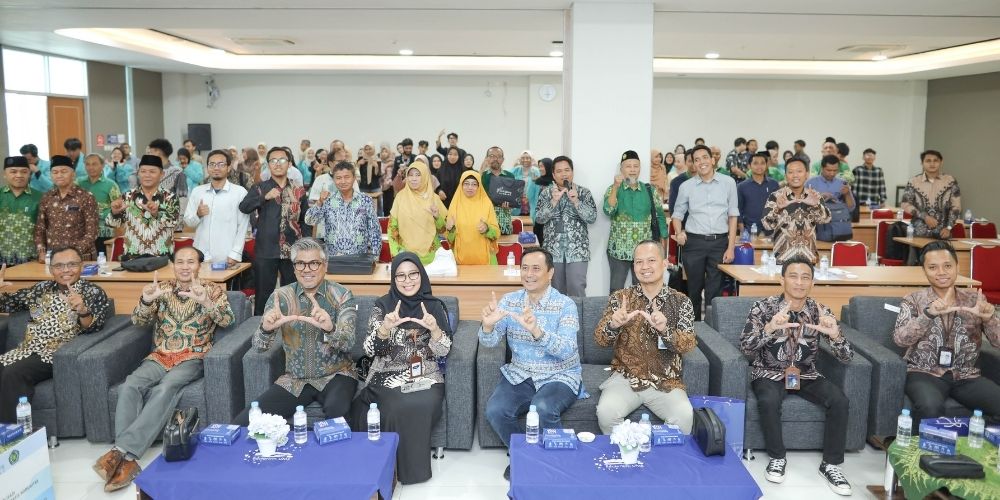
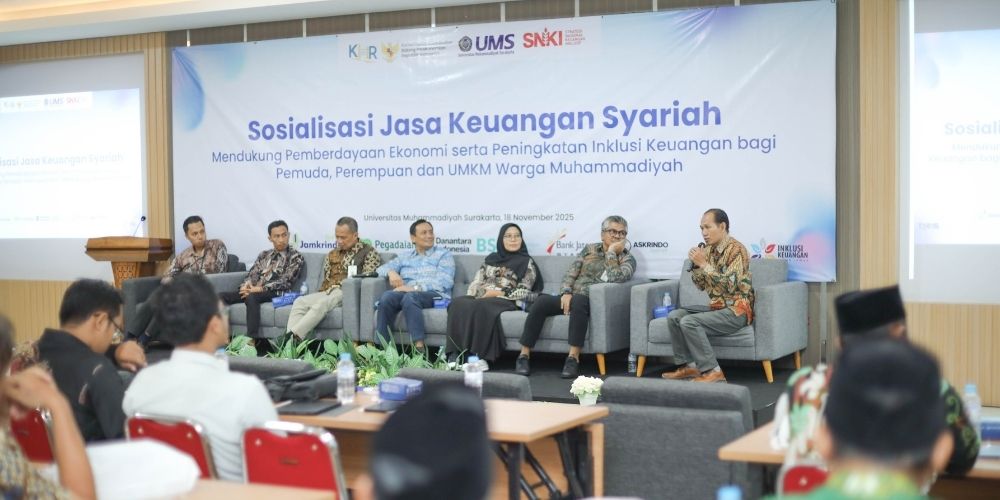
Surakarta, 18 November 2025 — Universitas Muhammadiyah Surakarta (UMS) hosted the Socialization of Sharia Financial Services on Tuesday (18/11/2025) at the Edutorium UMS. The event was organized by Kredit Usaha Rakyat (KUR), the Coordinating Ministry for Economic Affairs of the Republic of Indonesia, UMS, and the National Strategy for Financial Inclusion (SNKI) as part of a broader effort to expand literacy and inclusion in sharia-based financial services among youth, women, and Muhammadiyah MSME communities.
The program brought together various stakeholders from state-owned enterprises, regional-owned enterprises, and the UMS academic community. Attendees included Dr. Mohamad Ali, Dean of the Faculty of Islamic Studies (FAI) UMS; Dr. Istanto, Vice Dean of FAI UMS; Dr. Lukmanul Hakim, Head of the Sharia Economic Law Program; as well as Sidiq Permono Nugroho, Subdirectorate Head for Industrial Partnership Development at DRKUI UMS. Representatives from PP Muhammadiyah, including Hero Wahyudi, were also present, alongside key partners from Jamkrindo Syariah, Bank Syariah Indonesia, Pegadaian Syariah, Askrindo Syariah, and Bank Jateng Syariah.
In his remarks, Prof. Supriyono, Ph.D., UMS Vice Rector V, expressed strong support for this strategic collaboration, emphasizing the urgent need to improve financial literacy, particularly among young entrepreneurs and MSMEs.
“Access to banking services is often limited due to a lack of information. In fact, Muhammadiyah communities are very close to the sharia financial ecosystem,” he noted.
Prof. Supriyono also addressed the challenge of massification in higher education, where the job market is unable to absorb all graduates. He emphasized that universities must encourage students to develop entrepreneurial mindsets.
“As higher education expands, the job market cannot absorb everyone. Therefore, we hope to cultivate resilient young entrepreneurs,” he added.
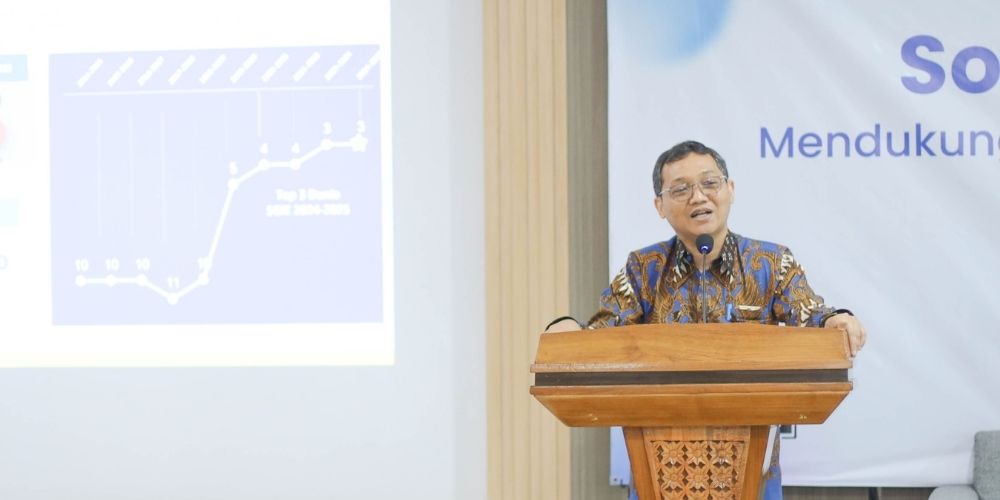
Representing the Coordinating Ministry for Economic Affairs, Dr. Ferry Irawan, S.E., M.S.E., Deputy for the Management and Development of State-Owned Enterprises, highlighted the importance of synergy between the government, universities, and Muhammadiyah communities in accelerating national economic growth.
“We maintain close engagement with UMS because it strengthens the alignment between government programs and the academic activities of UMS and Muhammadiyah,” he stated.
Dr. Ferry also outlined key national economic challenges, including job creation and the improvement of sharia financial literacy. He stressed that access to financing is available, but literacy and guidance remain the primary obstacles.
“Access to financing is no longer the issue. The real challenge is literacy and assistance,” he emphasized.
He further pointed to Indonesia’s growing potential in the global sharia economy, noting that Muhammadiyah and universities like UMS hold a strategic position in boosting sharia-based MSME development, digital financial transformation, and sharia financing innovation.
Through this initiative, UMS reaffirms its commitment to serving as a center for community economic empowerment and a strategic partner of the government in strengthening sharia-based MSME ecosystems. The university hopes that the outcomes of this program will open broader access and opportunities for students, youth, women, and Muhammadiyah MSMEs to grow as independent and empowered entrepreneurs.