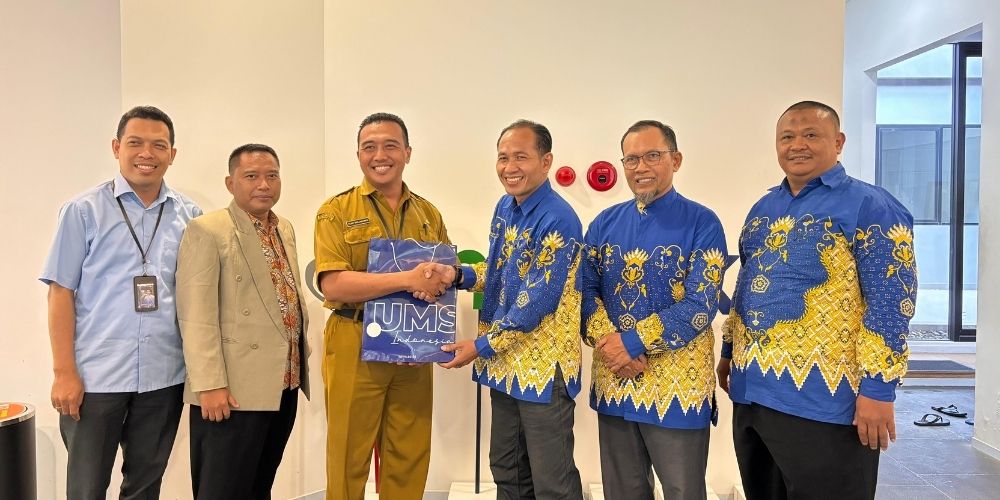

Surakarta, August 25, 2025 – Universitas Muhammadiyah Surakarta (UMS), through its Directorate of Reputation, Partnership, and International Affairs (DRKUI), is strengthening collaboration between universities, local government, and industry partners to accelerate research downstreaming. This effort is carried out through business incubation programs and technopark development in partnership with Solo Technopark (STP).
Head of the Science and Technology Area Management Unit (UPTD), Rony Widjanarko, S.H., M.H., explained that since becoming independent in 2022, STP has been mandated to carry out technical activities, incubation programs, and research collaborations with industry partners. To date, STP has signed several Cooperation Agreements (PKS) with UNS, UMS, ATMI, and ISI. “These collaborations are directed toward optimizing research so that it does not stop in the laboratory, but continues into innovations and products that can benefit society,” he said.
From UMS, Sidiq Permono Nugroho, M.M., Head of the Sub-Directorate of Reputation, Partnership, and International Affairs, emphasized the need to strengthen areas of collaboration. “Synchronization between STP and universities is essential, especially in developing business incubators and research centers. This way, research can be pushed further to produce competitive flagship products,” he explained.
Echoing this, Ir. Sri Sunarjono, M.T., Ph.D., Head of the Sub-Directorate of Innovation and Flagship Products at the Directorate of Research, Community Service, Publication, and IPR Center at UMS, highlighted the government’s expectation that university research should not end at publication. “There must be business incubators that support the emergence of startups from campus research. Some universities have already developed technoparks; the challenge is how to optimize them without creating sectoral egos,” he noted.
Meanwhile, Dr. Suranto, S.T., M.M., Director of UMS Vocational School, stressed the importance of sustainable funding schemes for business incubators. According to him, research outputs from lecturers and students should provide real impact for society while also contributing to the university’s revenue. “Business incubators are the bridge to ensure that research can be implemented effectively and sustainably,” he stated.
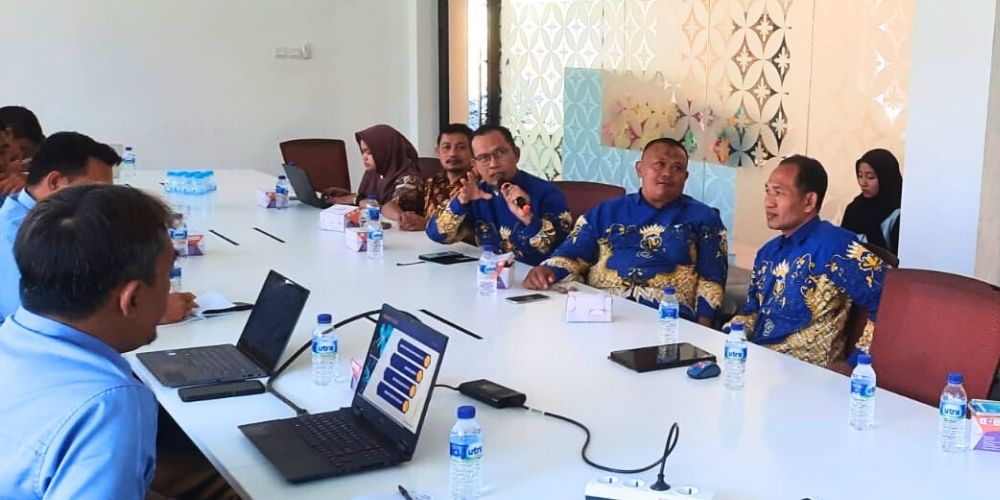
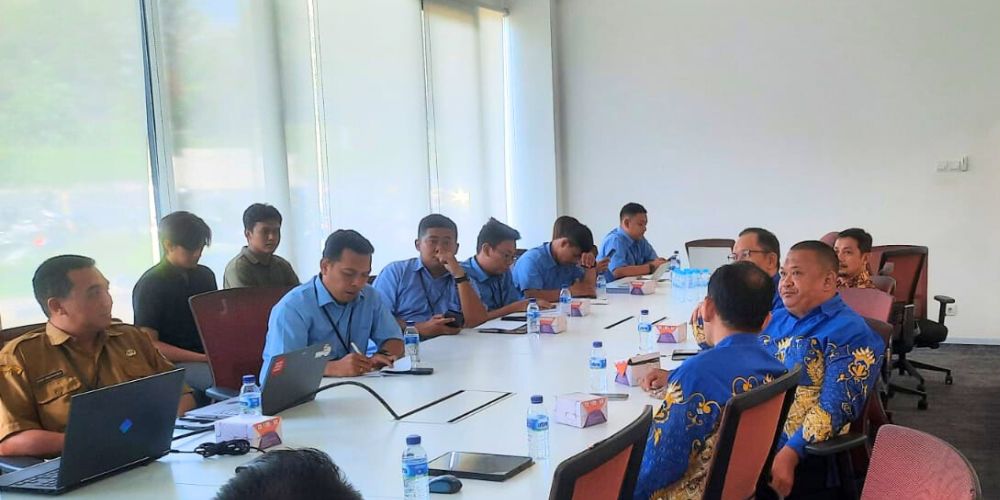
From STP’s side, it was conveyed that two main incubation programs are currently running: Solocorn, which focuses on digital talent and startup development, and Smeska, which targets training for non-digital MSMEs. In addition, the Solo Bridge program has been established to connect incubation growth with investor support. The program provides free office facilities for tenants, entrepreneurship training, digitalization, and the Next Young Entrepreneur initiative to nurture young talents.
The discussion concluded with a mutual understanding that focus areas such as information technology, energy, manufacturing, and the creative industry must continue to be optimized. Through strategic collaboration among universities, government, industry, and international partners, UMS and STP are confident in strengthening research downstreaming while producing startups and innovative products that deliver tangible benefits to society.
As a final note, UMS reaffirmed its commitment to fostering applicable research, strengthening the innovation ecosystem, and ensuring that every research output contributes meaningfully to national development.