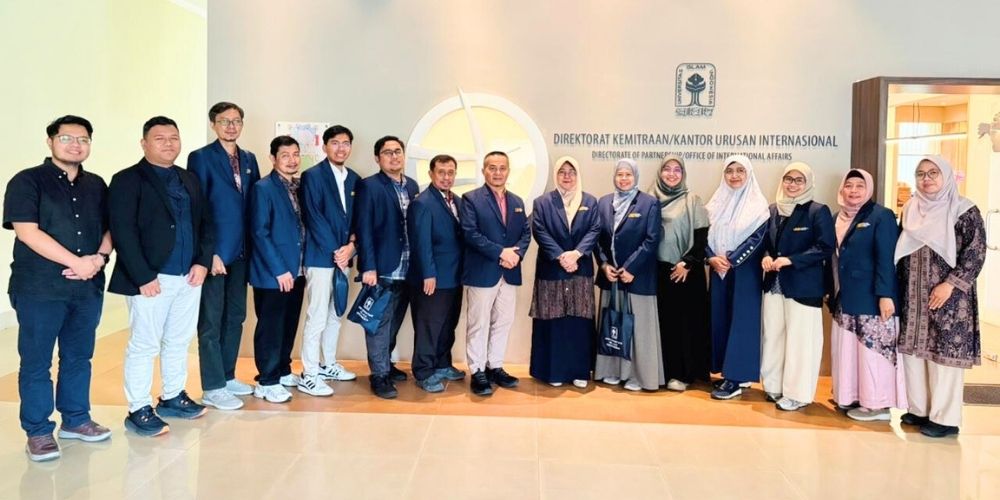

Yogyakarta, January 14, 2026 — Universitas Muhammadiyah Surakarta (UMS) conducted a benchmarking visit to Universitas Islam Indonesia (UII) Yogyakarta as part of its strategic efforts to strengthen and further develop the Double Degree and Passage to ASEAN (P2A) programs. This activity represents a concrete step by UMS in expanding international academic pathways and enhancing the quality of globally oriented program management.
The benchmarking visit served as a strategic forum for discussion and the exchange of best practices related to the management of international programs. Key issues discussed included the implementation of double degree schemes, student mobility management, cross-border academic recognition, and the strengthening of regional cooperation networks within ASEAN.
The Director of Reputation, Partnership, and International Affairs of UMS, Nurgiyatna, S.T., M.Sc., Ph.D., emphasized that the benchmarking initiative is an integral part of the university’s sustainable internationalization strategy.
“The development of Double Degree and P2A programs requires robust governance, curriculum alignment, and strong international partnerships. Through this benchmarking activity, UMS gained valuable insights from UII’s best practices to ensure that our programs are adaptive, high-quality, and aligned with international standards,” he stated.
Meanwhile, the Head of Academic Partnership Development and Mobility Subdivision at DRKUI UMS, Hepy Adityarini, S.Pd., M.A., Ph.D., highlighted that the benchmarking visit plays an important role in refining the design and implementation of international mobility programs.
“Double Degree and P2A programs not only provide cross-border academic opportunities for students, but also demand institutional readiness and mutual understanding between partner universities. Through this benchmarking, we gained comprehensive insights into program management mechanisms, credit recognition processes, and student support systems to ensure effective and sustainable implementation,” she explained.
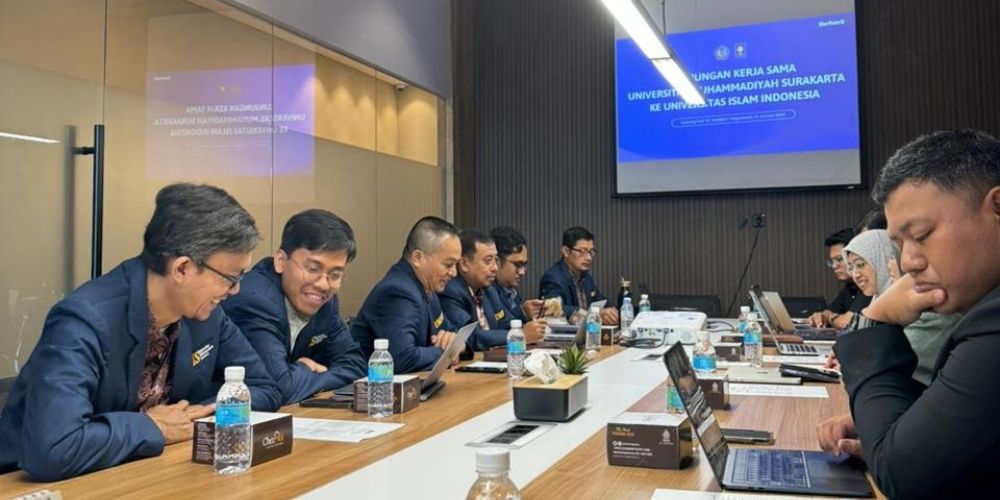
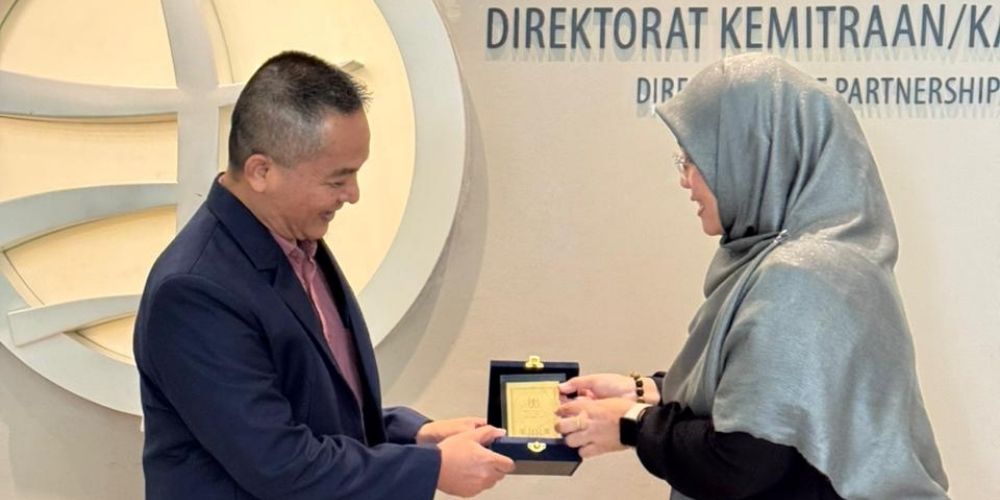
Through the discussion forum, UMS and UII exchanged experiences in designing and implementing academic programs that are responsive to the evolving landscape of global higher education. The dialogue also underscored the importance of institutional preparedness, supportive internal policies, and cross-unit synergy in ensuring the sustainability of international programs.
This benchmarking activity reflects UMS’s proactive approach in strengthening collaboration networks with national partner universities as a foundation for broader international cooperation. The exchange of ideas and experiences is expected to enrich institutional perspectives and enhance the effectiveness of international program implementation at UMS.
Looking ahead, UMS reaffirms its commitment to expanding collaboration with partner universities at both regional and global levels as part of its internationalization strategy. These efforts are aimed at improving academic quality, expanding student mobility opportunities, and strengthening UMS’s global competitiveness in the international higher education landscape.