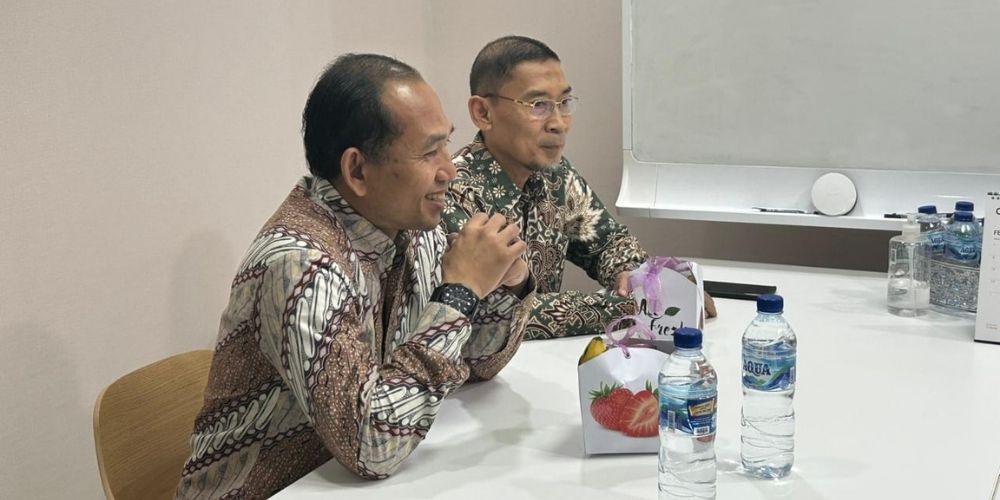
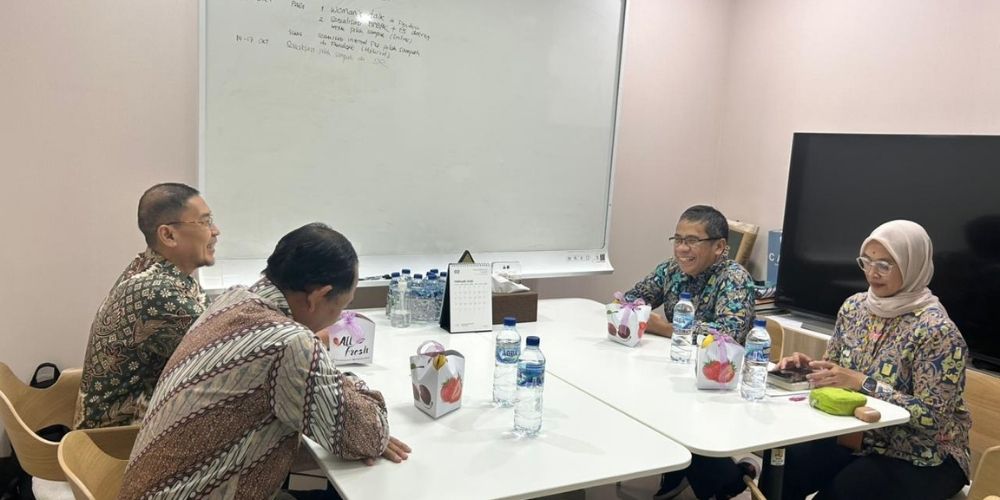
Jakarta, 4 February 2026 — Universitas Muhammadiyah Surakarta (UMS) has entered into a strategic collaboration with the Ministry of Public Works (PU) through the signing of an agreement to develop a landscape vegetation simulation application. The signing ceremony took place on Wednesday (4/2) at the Directorate General of Human Settlements (Cipta Karya), Ministry of Public Works, Jakarta.
The collaboration aims to develop a landscape vegetation simulation application that will function as a national vegetation database to support urban landscape planning and greening initiatives across Indonesia. The application is designed to be publicly accessible and serve as a scientific reference for urban planners, policymakers, and the wider community.
Vice Rector V for Research, Innovation, Reputation, Impact, Partnerships, and International Affairs of UMS, Prof. Supriyono, S.T., M.T., Ph.D., explained that UMS will play an active role in supporting the development of the application, particularly during the initial research phase.
“UMS will support the Ministry of Public Works, specifically the Directorate General of Human Settlements, in developing this landscape vegetation simulation application. In the first phase, we will focus on identifying plant species that are most suitable for various regional conditions in Indonesia,” said Supriyono when met at his office on Friday (6/2).
He added that the application is expected to become a national reference for communities in implementing accurate and sustainable environmental greening initiatives.
“This vegetation database can be utilized by the public to carry out environmental greening more precisely, in accordance with the geographical and climatic conditions of each region,” he added.
Meanwhile, Sidiq Permono Nugroho, S.E., M.M., Head of the Subdirectorate for Industry Partnership Development at the Directorate of Reputation, Partnership, and International Affairs of UMS, stated that the collaboration will involve several study programs at UMS, namely Informatics Engineering, Industrial Engineering, and Architecture.
The involvement of these study programs will be coordinated through three UMS research centers relevant to landscape vegetation studies: the Center for Social Informatics, the Center for Islamic Architecture Studies, and the Center for Logistics and Industrial Optimization Studies.
“The involvement of research centers from multiple disciplines is expected to enrich the outcomes of this research, both in terms of technology, design planning, and system optimization,” Sidiq explained.
He further elaborated that the vegetation research will document specifications of plant species with strong potential for landscape development based on three key aspects: function, characteristics, and planting location. Vegetation functions include shading, air pollution absorption, noise reduction, wind breaking, and visual barriers.
From a characteristics perspective, vegetation will be assessed based on sunlight exposure requirements, water needs, ability to attract wildlife, toxicity, and scent or odor produced. Meanwhile, planting locations will be determined according to climate zones and regional ecoregions.
“Vegetation planting should not be done carelessly. If plant species are not suited to local climatic conditions, the risk of planting failure will be high. This application is expected to provide accurate recommendations so that greening efforts can be effective and sustainable,” he emphasized.
As a follow-up to the signing of the agreement, the three UMS research centers involved are scheduled to hold a coordination meeting in mid-February. The meeting aims to finalize the research timeline, division of work areas, and targeted outcomes.
“We hope the research can be implemented promptly with clear task distribution and measurable targets, so that the results can provide tangible benefits for society and urban landscape development in Indonesia,” Sidiq concluded.