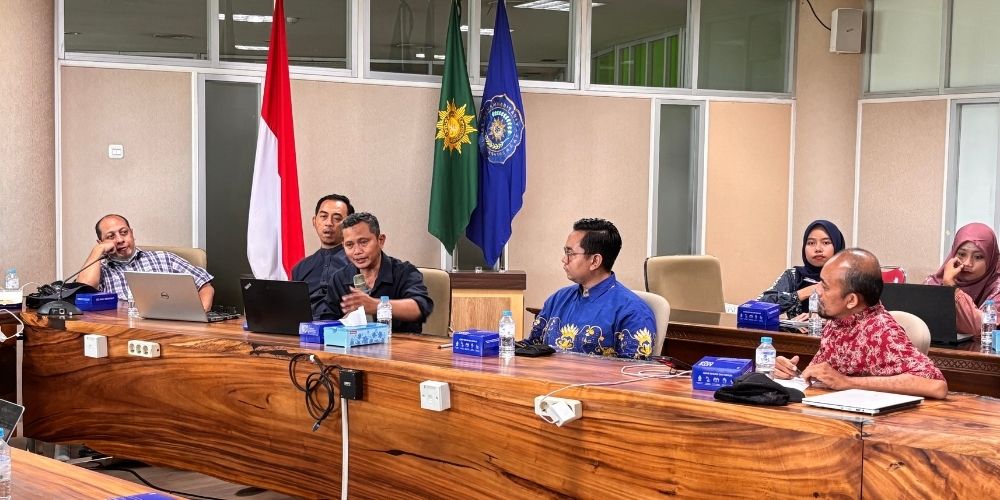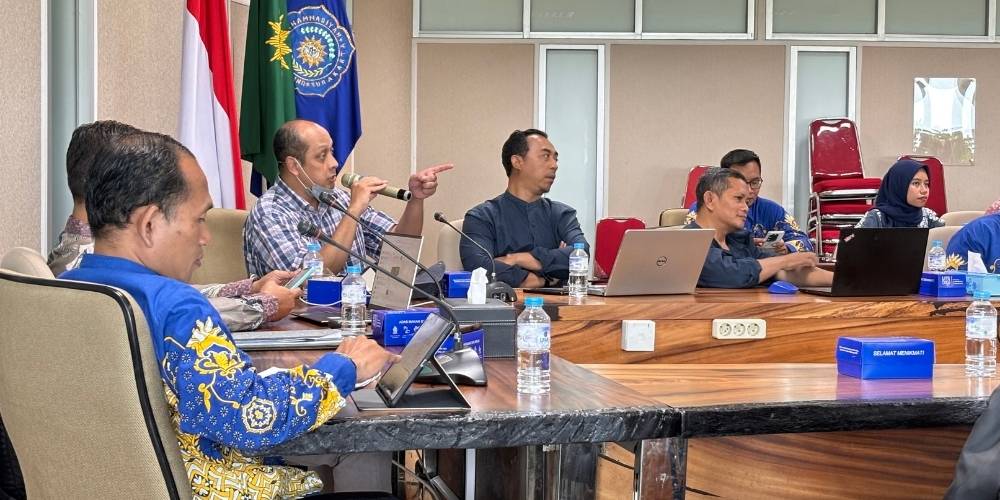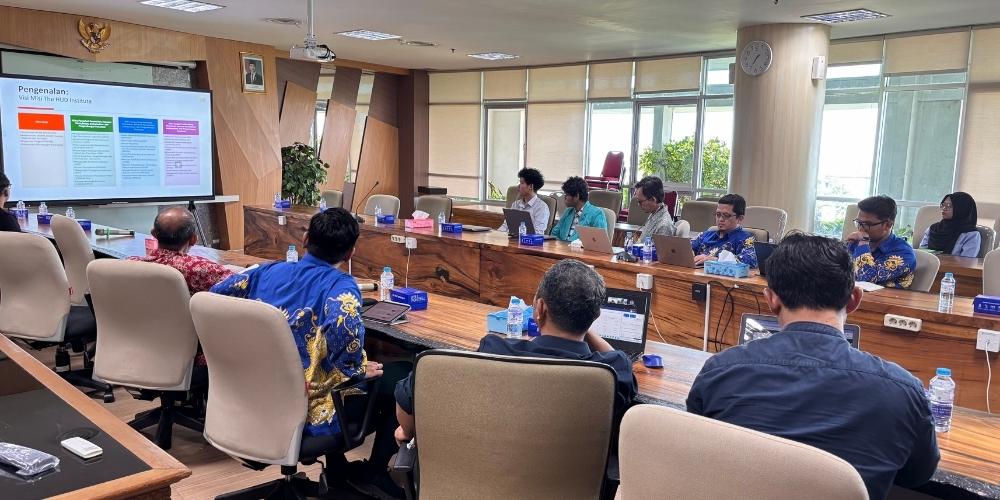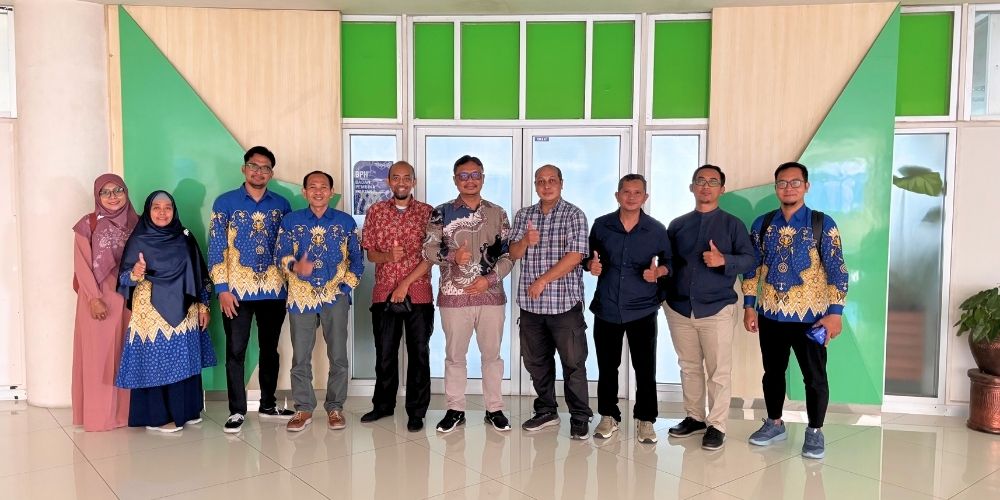

Surakarta, 8 September 2025 – The Directorate of Reputation, Partnerships, and International Affairs (DRKUI) of Universitas Muhammadiyah Surakarta (UMS) has taken a strategic step by initiating collaboration with the Housing Urban Development (HUD) Institute, a research institution focused on housing, settlement, and urban development. The meeting, held at the BPH Meeting Room, 6th Floor of the Siti Walidah Main Building, aimed to create opportunities for UMS research centers to contribute research-based recommendations that reflect real conditions in the community.
Through this initiative, DRKUI acts as a bridge between UMS research centers and HUD Institute, fostering collaboration aligned with the Tri Dharma of Higher Education—education, research, and community service. This collaboration is expected to produce bottom-up policy recommendations, ensuring that proposed policies are more targeted and responsive to the actual needs of society.
The focus of the collaboration includes land provision studies, housing financing schemes, and the design of more inclusive housing programs. HUD Institute emphasized its commitment to bridging academia and policymakers, especially in support of the Indonesian government’s Three Million Houses Program. HUD expressed its readiness to share knowledge and engage in discussions with the university to strengthen evidence-based and needs-driven policymaking.
Vice Chairman of HUD Institute, Agung, outlined three main objectives of the collaboration with UMS:
Strengthening Academic Collaboration – HUD teams are ready to serve as thesis supervisors for UMS students taking courses related to housing and urban development, making the learning process more practical and applicable.
Providing Housing Development Solutions – HUD offers proposals for housing finance schemes and governance models to ensure more effective and sustainable housing development.
Building a Collaborative Ecosystem – HUD seeks to synchronize efforts between HUD, universities, and local governments to create a sustainable research ecosystem in housing and urban development, build comprehensive housing databases for local governments, and facilitate opportunities for faculty and student exchanges.
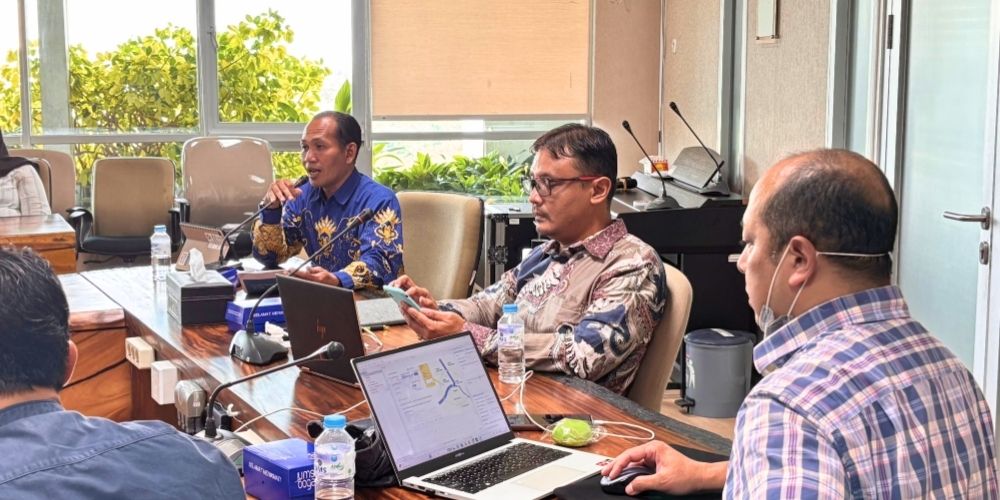
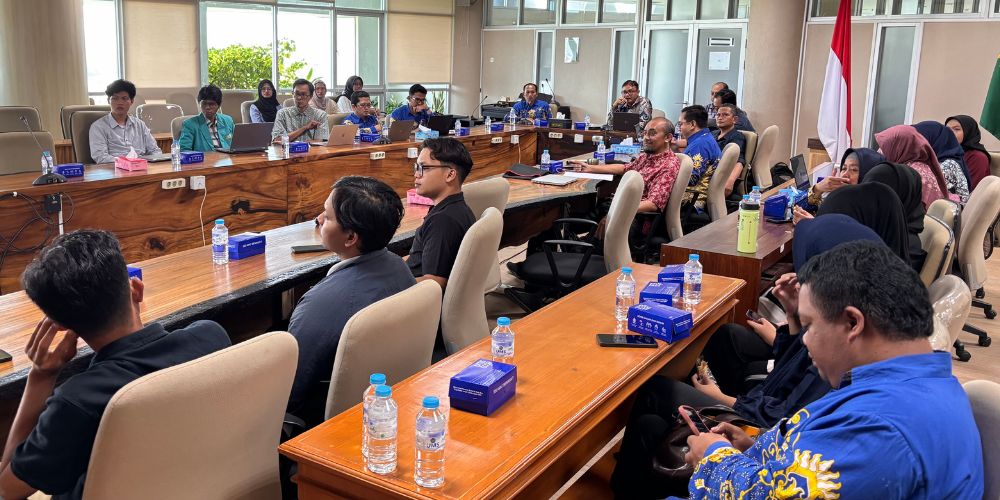
Head of the Sub-Directorate for Industrial Partnership Development, Sidiq Permono Nugroho, S.E., M.M., reaffirmed DRKUI’s commitment to supporting UMS research centers in exploring strategic collaboration opportunities with HUD Institute. “We hope this initiative will lead to concrete follow-up activities that generate bottom-up public policy recommendations related to housing development in Indonesia,” he stated.
Echoing this, Kussudyarsana, S.E., M.Si., Ph.D., Head of the Division for Resource Planning and Development at UMS’s Planning and Development Agency, emphasized that the outcomes of this meeting will soon be coordinated with the relevant research centers. “With proper coordination, each research center can contribute according to its expertise, ensuring that collaboration with HUD Institute delivers optimal results for society,” he explained.
Kussudyarsana further highlighted that the coordination process will involve the formation of applied schemes, planning the direction of collaboration, and aligning initiatives with user needs to ensure the results are beneficial and implementable.
Through this step, UMS reaffirms its commitment to becoming a center for research-based, community-oriented solutions. The collaboration with HUD Institute is expected to support sustainable housing development, strengthen academia–government synergy, and generate bottom-up policy recommendations with a tangible impact on society.