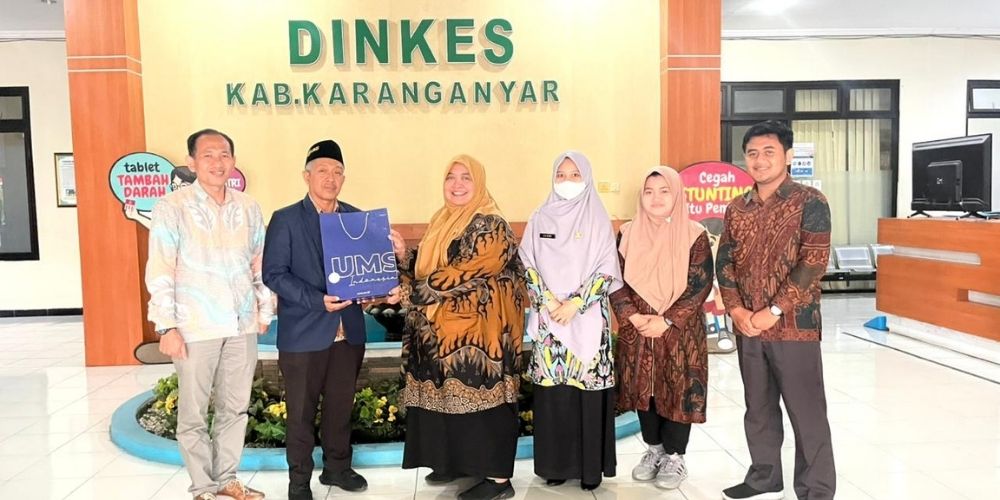

Surakarta, September 9, 2025 – Universitas Muhammadiyah Surakarta (UMS), through the Directorate of Reputation, Partnership, and International Affairs (DRKUI), continues to expand its industry collaboration network by partnering with the Karanganyar District Health Office (Dinas Kesehatan/Dinkes). This strategic collaboration aims to enhance early detection and data-driven monitoring of Tuberculosis (TB) cases, improving healthcare service effectiveness from the community health center (puskesmas) level up to the district level.
Head of the TB-HDCP Study Center at UMS, Noor Alis Setiyadi, S.KM., M.K.M., Ph.D., explained that since 2019, a village-based TB monitoring initiative has been implemented in Sukoharjo Regency. The system utilizes data inputs from puskesmas and visualizes them into village-level coordinate maps, allowing the identification of red zones (areas with high case numbers) and white zones (TB-free areas). The digital maps are based on the APEI Google platform, enabling quick coordination with local health offices for timely field interventions.
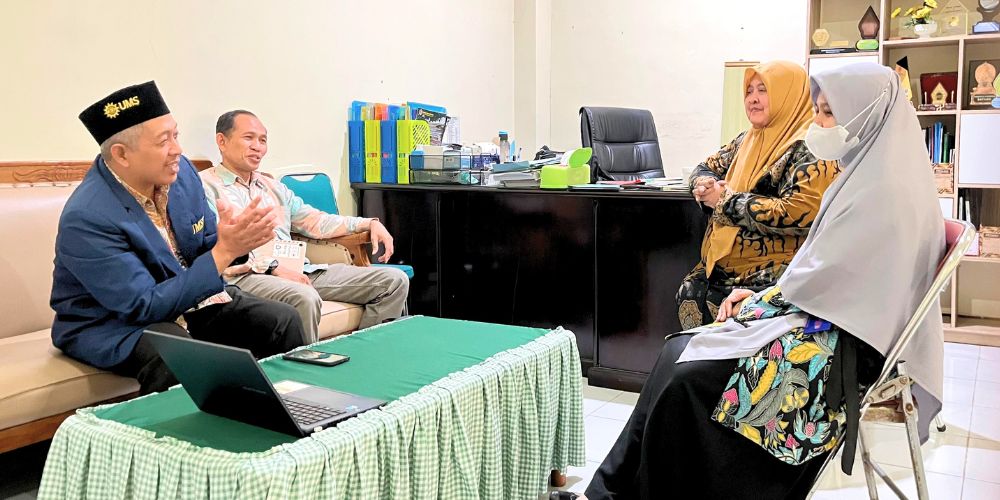
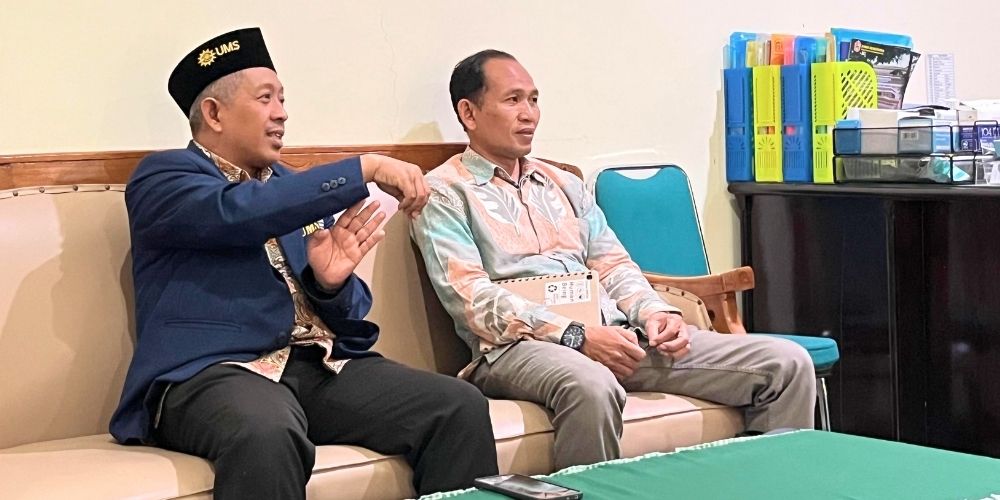
During the meeting, the Karanganyar District Health Office expressed its commitment to collaborate with UMS in developing a more comprehensive TB tracking system. The collaboration will include:
– Strengthening the coordinate features on case maps,
– Adding bottom-up program recommendation features that allow proposals from puskesmas,
– Developing a tracking module specifically for Drug-Resistant TB (DR-TB).
Representatives from the Health Office also shared that since 2021, they have developed a TB patient detection application at the Kebakkramat puskesmas. The application automatically generates notifications for positive screening results and is integrated with the National TB Information System (SITB), manual data from DTPM, and the BPJS (Indonesia’s national health insurance) database. This integration ensures that patients receive follow-up care, including BPJS reactivation for previously inactive participants.
Beyond detection, the application facilitates routine coordination at the puskesmas level. The data collected can be accessed through the Health Office Head’s dashboard, ensuring faster, more accurate, and evidence-based decision-making.
Recognizing the great potential of this initiative, UMS is ready to take an active role through academic support, research, and health technology development. This collaboration also reflects UMS’s commitment to supporting the national TB elimination program through innovation and community-driven research.
Sidiq Permono Nugroho, S.E., M.M., Head of the Industrial Partnership Development Subdirectorate at DRKUI UMS, reaffirmed UMS’s commitment, ” “UMS is ready to become a strategic partner of the Karanganyar District Health Office, particularly in the development of technology-based detection systems, epidemiological research, and data-driven policy recommendations to support TB control at the regional level”
As part of this ongoing commitment, UMS will coordinate with relevant study centers to maximize collaboration potential. This includes designing applied schemes, strengthening application features through user-driven design, and providing research support and human resources to ensure the program runs effectively and delivers real impact for the people of Karanganyar.